How Greenville’s Beautiful Trees Are Destroying Your Sewer Line (And How We Fix It)
The Culprit Isn’t the Pipe. It’s What’s Growing Toward It.
A slow drain that turns into a full backup rarely starts with the pipe itself failing on its own. In older Greenville neighborhoods like North Main, where mature oaks and hardwoods have had decades to grow, the real story behind a sewer line repair Greenville SC homeowners eventually need is usually underground and out of sight until the toilet won’t flush right. Tree roots search out any source of moisture, and a clay or cast-iron sewer line with even a hairline joint gap is exactly what they find. If drains have started backing up at the same time every year, or right after a heavy rain, that pattern is worth a real look before it turns into an emergency, and that conversation starts at 864-546-9959.
What’s Actually Happening Underground
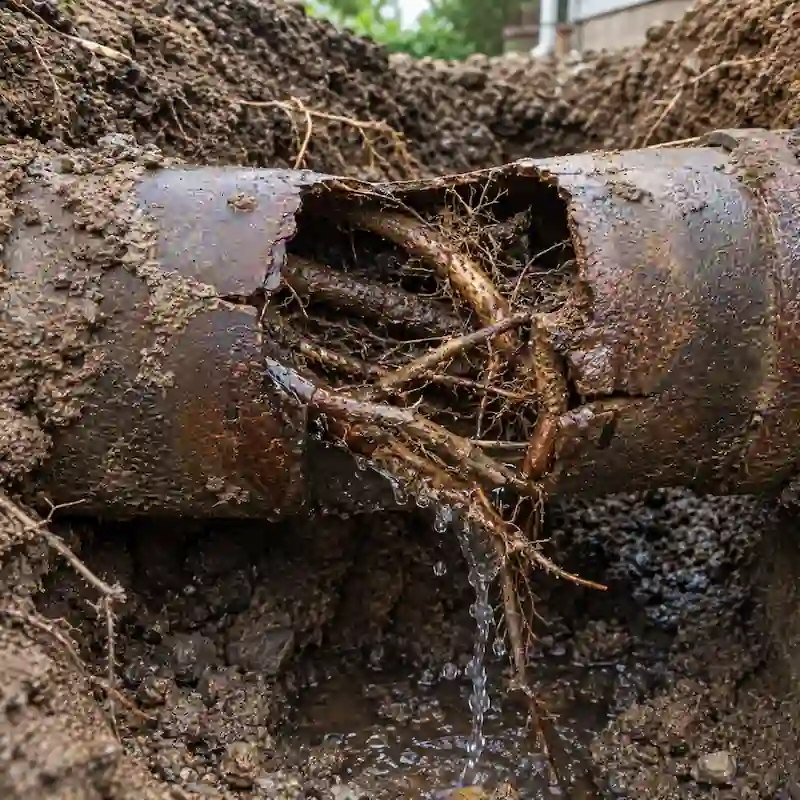
Root intrusion happens because roots grow toward water, and a sewer line carries water and nutrients constantly. Even a small crack or a loose joint releases enough moisture into the surrounding soil to draw roots straight to it. Once a root finds that opening, it does not just brush past. It grows into the gap, then thickens over years until it is physically blocking the pipe or has cracked it wider trying to fit.
This is a slower problem than most people expect, which is part of why it goes unnoticed for so long. A pipe with early root intrusion might drain fine for months with only an occasional slow gurgle after a big rain, when saturated soil pushes more water through the compromised joint. By the time backups happen regularly, the roots have usually had years to establish themselves inside the line, not weeks.
Why Older Neighborhoods See This More Than New Construction
Homes built decades ago in established Greenville neighborhoods often still run on the original clay or cast-iron sewer lines, materials that were standard at the time but that develop joint gaps and cracks as they age. Newer PVC sewer lines are far more resistant to root intrusion because they have fewer joints and a smoother, tighter seal. That difference in materials is the biggest single reason mature-tree neighborhoods and root problems show up together so often.
The trees themselves are not the enemy here, and removing a mature oak is rarely the right answer to a plumbing problem. The pipe material and its age are what actually determine whether roots can get in, which means two homes on the same root-heavy street can have completely different outcomes depending on when their sewer line was installed or last replaced.
What Fixing It Actually Looks Like
A camera inspection is what turns a guess into a plan. Running a camera down the line shows exactly where roots have intruded, how much of the pipe diameter is affected, and whether the damage is isolated to one section or spread across the run. That inspection is what decides whether the fix is a targeted sewer line repair at the affected section or a longer-term sewer line replacement where root damage has compromised too much of the line to patch reliably.
Trenchless repair options have changed what this process looks like for a lot of homeowners. Rather than digging a trench across the entire yard to reach the damaged section, some root intrusion repairs can be handled with methods that access the pipe through existing entry points, which limits the disruption to landscaping and hardscaping that took years to establish. Not every situation qualifies for a trenchless approach, but where it applies, it changes the whole experience of getting the line fixed.
Root intrusion that gets caught early is often manageable with a targeted repair to the affected joint or section, without disturbing the rest of a line that is otherwise sound. Waiting until roots have spread further along the pipe, or until the pipe itself has cracked under the pressure of a growing root, is what pushes a job from repair territory into full replacement territory. That difference is exactly why an inspection at the first sign of a problem matters more than most homeowners assume.
What This Actually Costs Homeowners Who Wait
Ignoring early root intrusion does not make it resolve itself. A sewer backup that reaches a finished basement or crawlspace can mean water damage restoration costs that run well beyond the plumbing repair itself, with third-party industry estimates typically landing somewhere between one thousand and six thousand dollars depending on how much of the space is affected. A repair caught early, before roots have fully compromised a section of pipe, is almost always a smaller job than one discovered only after a backup has already happened inside the home.
That is the real argument for a camera inspection at the first sign of a slow or recurring backup, rather than waiting for a full stoppage. Catching root intrusion while it is still isolated to one section of pipe keeps the fix contained. Waiting until it forces a backup turns a plumbing problem into a plumbing problem plus a cleanup problem, and only one of those is avoidable.
Get an Answer Before It Becomes an Emergency
A recurring backup in an older Greenville home is not something to keep snaking and hoping it holds. Root intrusion gets worse with time, not better, and the earlier it is found, the smaller the fix tends to be. Call 864-546-9959 and get a camera down the line before a slow drain turns into a backed up sewer line on a weekend.
0 Comments